| Every Pochampally ikat saree begins long before the loom starts moving. The design is planned, the yarn is tied and dyed, and only then is the cloth woven, with each thread placed so the pattern appears as the saree takes shape. If you are exploring Pochampally ikat sarees, this guide explains how they are made, what their motifs mean, which styles to look for, and how to choose one with confidence. 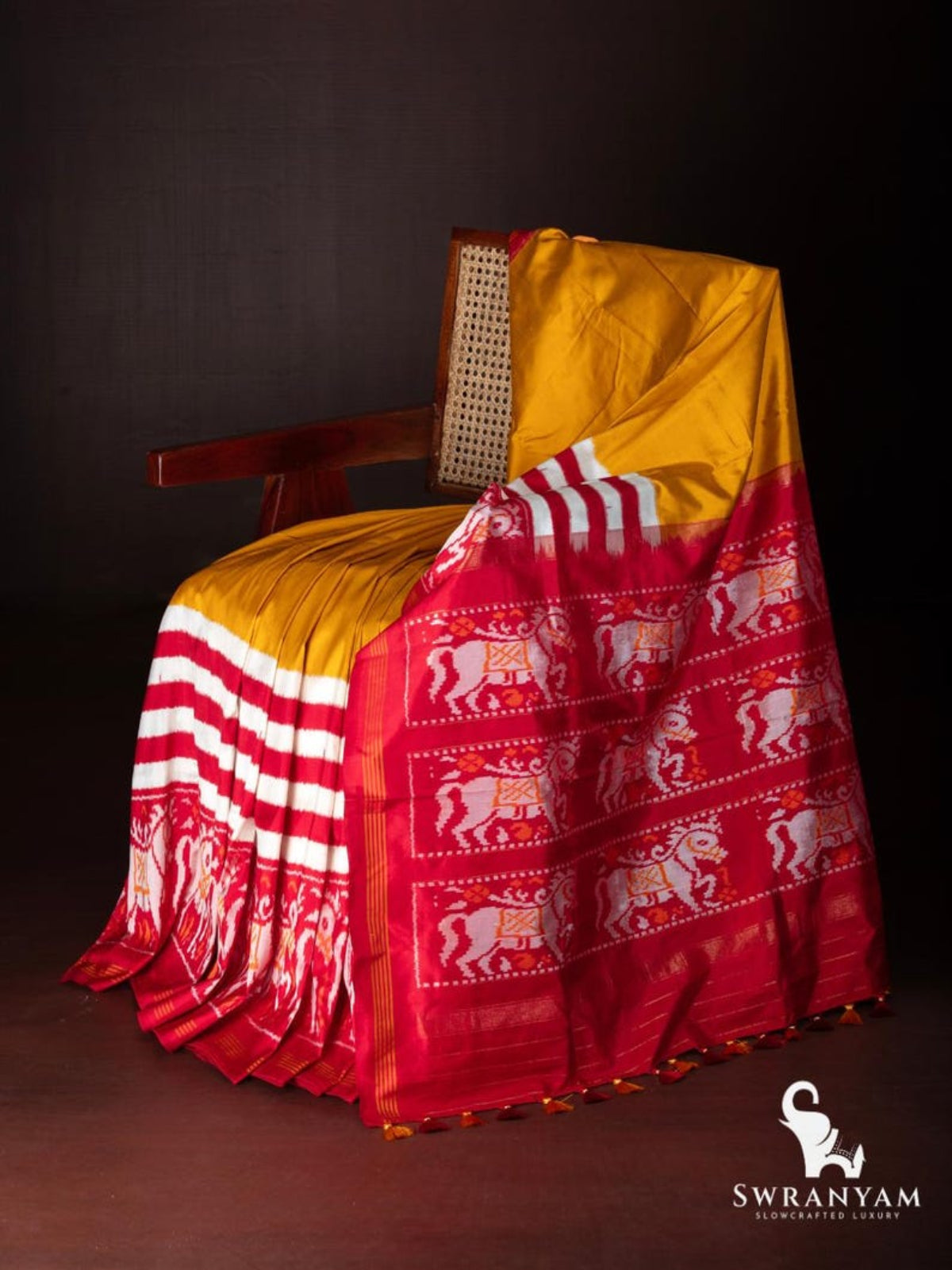
The Story Behind Pochampally Ikat
Pochampally ikat comes from Bhoodan Pochampally in Telangana, a weaving cluster where families have practised the craft for generations. The word “ikat” comes from the Malay-Indonesian mengikat, meaning “to tie or bind,” and it describes the technique at the heart of the weave.
Ikat is found in several parts of the world, but Pochampally has built a distinct identity around its bold geometric designs and vivid colours. The craft carries Geographical Indication (GI) recognition, which protects the name and helps buyers identify genuine regional work.
How a Pochampally Ikat Saree Is Made
Understanding the process makes it easier to see why handloom ikat is valued.
- Design planning. The weaver decides the pattern, the colours and the placement of motifs.
- Yarn preparation. The silk or cotton yarn is stretched on a frame and prepared for tying.
- Resist tying. Sections of the yarn are tightly bound so the dye cannot reach them. The tied areas will keep their original colour.
- Dyeing. The yarn is dyed in one colour, then tied and dyed again for each additional shade.
- Unbinding and drying. The ties are removed and the dyed yarn is dried, revealing the pre-planned colour pattern.
- Loom setup. The dyed threads are mounted on the loom and carefully aligned so the pattern lines up.
- Weaving. The weaver passes the weft through, adjusting the threads as the design appears.
Because the dyed threads settle very slightly differently during weaving, the pattern edges look soft and feathered. That gentle blur is the signature of real ikat, and it is why no two sarees are identical.
Single Ikat, Double Ikat and Weft Ikat
- Single ikat: Only the warp or the weft is tie-dyed. The design is clean and bold, and these sarees are popular for their balance of beauty and value.
- Double ikat: Both warp and weft are tie-dyed and aligned. The process is more demanding and the patterns are sharper and more intricate.
- Weft ikat (Uzbek-style): The design sits in the weft threads, often paired with a contrasting pallu for a modern, graphic look.
Fabrics: Silk, Tussar and Cotton
- Silk ikat: Rich colour, soft sheen and a graceful drape. A good choice for weddings, festivals and receptions.
- Tussar silk ikat: Tussar is a wild silk with a natural golden tone and a slightly textured feel. It looks earthy and contemporary, and it suits daytime events and office wear.
- Cotton ikat: The lightest and most breathable, ideal for warm weather and everyday elegance.
You can browse silk and tussar silk options in our Pochampally ikat saree collection.
Signature Motifs and Patterns
Pochampally designs are built on geometry, but there is plenty of variety.
- Chevron and zigzag: Sharp, rhythmic lines that feel modern and energetic.
- Houndstooth and diamonds: Repeating geometric shapes that look tailored and elegant.
- Elephants and birds: Figurative motifs that bring a traditional, storytelling quality.
- Florals: Softer designs, often placed along borders and pallus.
- Temple borders: Wide borders inspired by South Indian temple architecture.
- Tassel pallus and zari borders: Finishing details that add a festive touch.
Colours That Define Pochampally Ikat
The craft is known for confident colour combinations.
- Royal purple with gold zari: Regal and festive.
- Indigo blue with white motifs: Crisp, cool and timeless.
- Maroon and red: Traditional and auspicious.
- Charcoal grey with red accents: Contemporary and striking.
- Black with multicolour pallu: Bold for evening events.
- Sage green, wine and mustard: Rich, earthy combinations for festivals.
How to Choose the Right Pochampally Ikat Saree
- For weddings and receptions: Pick silk with a zari border in jewel tones such as purple, maroon or wine.
- For festivals and pujas: A temple-border silk ikat in red, mustard or magenta looks festive and comfortable.
- For work and daytime events: Tussar silk or a muted ikat with a slim border is polished and easy to wear.
- For parties: Black, indigo or charcoal with a bold pallu makes a modern statement.
- For gifting: A classic colour with a traditional or geometric pattern suits most tastes.
How to Spot Genuine Handloom Ikat
Printed imitations are common, so check these points.
- Feathered edges. Real ikat has soft, slightly blurred pattern edges. Digital prints are sharp and uniform.
- Pattern on both sides. Because the design is woven in, the reverse side shows the pattern too.
- Clear product description. Look for the fabric (silk, tussar silk), the ikat type (single, double or weft) and the border details.
- Close-up photos. You should be able to see the weave and the pallu clearly.
- Realistic pricing. Handloom ikat takes many hours of skilled work, so very low prices for “pure silk” are a warning sign.
- Seller transparency. A trustworthy store works with weavers and can tell you where its sarees come from.
- Clear policies. Read the shipping policy and refund policy before ordering.
Pochampally Ikat Compared with Other Ikat Weaves
India has several ikat traditions, and it helps to know how they differ.
You can compare them all in our saree collection.
Styling Your Pochampally Ikat Saree
- Let the pattern lead. Ikat is already a statement, so keep jewelry simple. A pair of earrings or a single necklace is enough. See our silver jewelry.
- Choose a thoughtful blouse. A plain blouse in a colour pulled from the saree looks refined, while a contrast blouse adds energy. Browse our blouse collection.
- Pleat evenly. Ikat silk holds pleats well, which shows off the geometry of the pattern.
- Match the mood to the occasion. Gold zari and a bun for a wedding, a tussar ikat with a loose braid for a day event.
If you need help with blouse measurements, contact us. Many of our customers have mentioned how well their stitched blouses fit.
Caring for Your Ikat Saree
- Dry clean silk and zari sarees, especially in the first few washes.
- Wash dark colours separately if you do hand wash cotton ikat, since deep dyes can bleed.
- Store in soft cotton or muslin, not plastic.
- Keep away from direct sunlight, moisture and perfume.
- Refold every few months along different lines to protect the fibres and the zari.
- Iron on a low silk setting with a cloth in between.
For more detail, read our fabric wash and care guide.
Why Choose Swranyam for Pochampally Ikat Sarees
Swranyam celebrates India’s heritage, tradition and craftsmanship. We work with artisans, weavers and small entrepreneurs across India to curate handcrafted collections that support livelihoods and help preserve lesser-known crafts, and we make them accessible to a global audience. You can learn more about us.
When you shop with us, you can expect:
- A curated range of silk and tussar silk ikat sarees
- Detailed product pages with multiple photos
- Blouse stitching options
- Matching jewelry and accessories
- Friendly support through WhatsApp and email
Frequently Asked Questions
Where do Pochampally ikat sarees come from?
They are woven in Bhoodan Pochampally, in Telangana, India.
How is ikat different from a printed saree?
In ikat, the yarn is tied and dyed before weaving, so the pattern is part of the fabric. In a print, the design is applied on top of finished cloth.
What is the difference between single and double ikat?
Single ikat has tie-dyed threads in one direction (warp or weft), while double ikat has them in both directions.
Are Pochampally ikat sarees heavy?
No. They are generally lighter than traditional bridal silks, so they are comfortable for long events.
Can I wear a Pochampally ikat saree to a wedding?
Yes. A silk ikat with a zari border works well for weddings and receptions.
Why do ikat patterns look slightly blurred?
The tie-dyed threads shift very slightly during weaving, which creates the soft, feathered edges that mark genuine handloom ikat.
Final Thoughts
A Pochampally ikat saree carries planning, patience and skill in every thread. Start with our Pochampally ikat saree collection, compare other weaves in the saree collection, and choose the pattern and colour that feels like yours. |

